

Netball is one of Australia’s most popular sports, particularly among adolescent females. It’s fast, explosive, and physically demanding, requiring repeated jumping, landing, rapid acceleration and deceleration, pivoting, and sharp changes of direction.
While these movements are essential to performance, they also place significant stress on the knees, ankles, hips, and lower back, making injuries extremely common from junior netball through to elite competition.
For netballers of all levels in Adelaide, looking after your body is just as important as improving your fitness, footwork, and game skills. This article explores common netball injuries, why they occur, and how physiotherapy can help keep you strong, confident, and on the court longer.
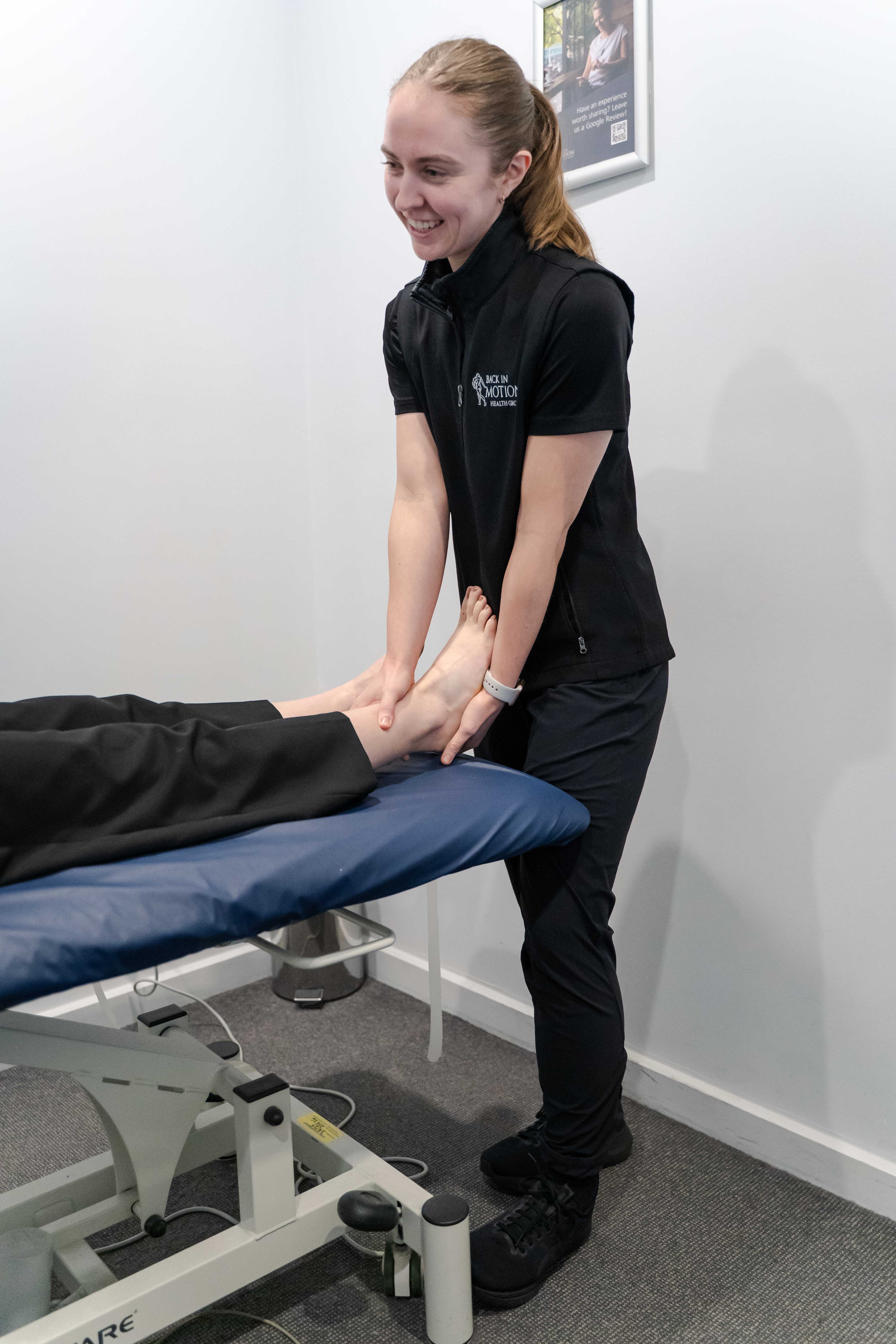
Why Are Netball Injuries So Common?
Netball’s footwork rules create unique movement demands compared with many other sports. Because players must stop immediately after receiving the ball, the sport involves frequent high-force braking, single-leg landings, rapid pivots, and explosive direction changes in confined spaces.
Unlike sports where athletes can “run through” momentum, netball often requires forces up to 3.5–5.7 times bodyweight to be absorbed rapidly through the knee, ankle, hip, and trunk (A. Mothersole et al., 2013). These loads are repeated hundreds of times across training and matches, meaning even small deficits in strength, control, or fatigue tolerance can increase injury risk over time.
Research from Netball Australia shows knee injuries account for approximately 40–45% of reported injuries, with ACL injuries alone contributing to around 25% of serious injury claims (Downs et al., 2021; Netball Australia, 2019). While ankle sprains are also extremely common, knee injuries often result in significantly longer rehabilitation and time away from sport.
Common Netball Injuries
ACL Injuries
ACL injuries are among the most serious injuries in netball and commonly occur without contact from another player.
Video analysis from Carlson et.al (2016) consistently identified single-leg landing as the most common injury scenario, particularly when combined with knee valgus (“knee collapse inward”), poor trunk control, or stiff upright landing strategies. ACL injuries often require surgery and 9–12 months or more of rehabilitation before return to sport.
Ankle Sprains
Ankle sprains commonly occur during jumping, landing in traffic, and rapid direction changes. Recurrent sprains that are not properly rehabilitated may lead to chronic instability, ongoing pain, and reduced confidence on court.
Patellofemoral Pain (“Runner’s Knee”)
Pain around or behind the kneecap is particularly common in adolescent and recreational netballers. Repeated jumping and landing loads, poor lower limb control, reduced hip strength, and sudden increases in training volume can all contribute.
Achilles & Calf Injuries
The repeated jumping and explosive push-off demands of netball place high stress through the calf-Achilles complex. Fatigue, training spikes, and reduced lower limb strength may contribute to tendon overload or calf strains.
Low Back Pain
Netball places repeated stress through the spine during jumping, landing, twisting, and overhead movements. Poor trunk control, reduced hip mobility, fatigue, and high training loads may all contribute to low back pain in netballers.
Why Injury Prevention Matters
In many cases, non-contact netball injuries are not simply “bad luck.”
Research consistently shows that how athletes land, stop, and change direction plays a major role in injury risk. Common high-risk movement patterns include:
- Dynamic knee valgus - knee collapsing inward
- Poor trunk or pelvic control
- Stiff or upright landings
- Reduced hip and knee flexion
- Poor single-leg stability
- Inefficient deceleration mechanics
- Technique breakdown under fatigue
Importantly, many of these factors are modifiable.
This is where physiotherapy can play a major role, not only after injury, but before problems develop.
Managing Training Load Matters Too
Injury risk is influenced not only by movement quality, but also by how much load the body is being asked to tolerate (Sinclair et al., 2020).
Netballers commonly run into trouble when there is a sudden increase in training or competition demands faster than the athlete’s physical capacity to handle it, such as:
- Returning too quickly after time off
- Multiple games or tournaments in short periods
- Rapid increases in running or jumping load
- Balancing club, school, representative, and gym commitments
- Returning from injury before strength or fitness has recovered
This is especially relevant in adolescent athletes, where growth spurts, changing biomechanics, and increasing game intensity often occur simultaneously.
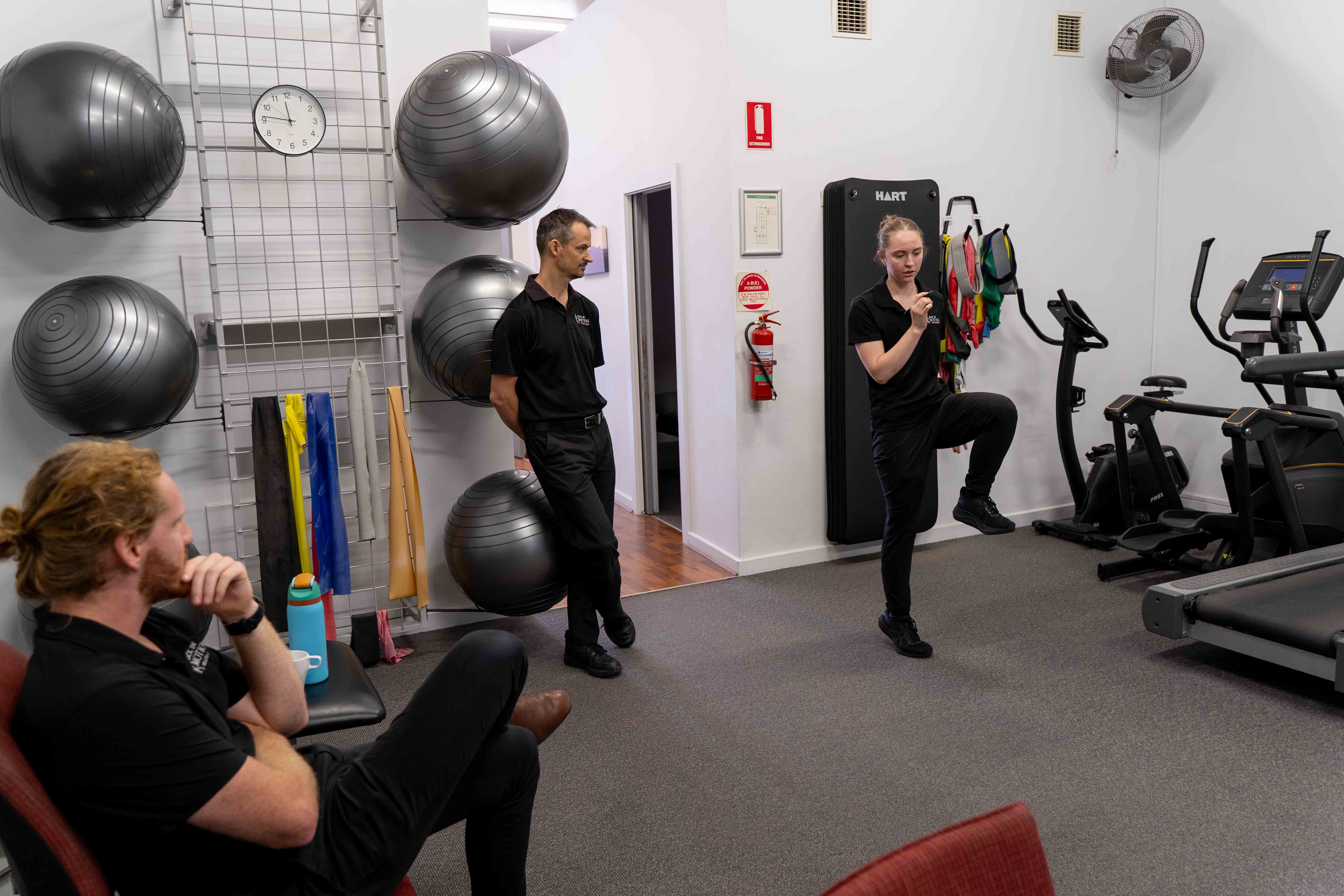
How Physiotherapy Can Help Netballers
At Back In Motion Campbelltown, our physiotherapists work with netballers to not only manage injuries, but also improve movement quality, build resilience, and reduce future injury risk.
Depending on the athlete and their goals, treatment may involve:
- Assessing landing, jumping, and change-of-direction mechanics
- Identifying strength deficits or side-to-side asymmetries
- Improving hip, calf, trunk, and lower limb strength
- Retraining deceleration and cutting technique
- Progressive plyometric and agility rehabilitation
- Guidance around training load and recovery
- Return-to-play planning following injury
- Taping and bracing education where appropriate
- Footwear recommendations for court demands and support needs
We also commonly use principles from the Australian-developed, evidence-based Netball KNEE Program within rehabilitation and injury prevention planning. The program provides a useful framework for understanding the movement demands of netball, particularly around landing control, balance, and lower limb mechanics (Netball Australia, 2019).
Importantly, rehabilitation should always be individualised. While group injury-prevention programs are extremely valuable, some athletes require more targeted strength, control, or return-to-sport progressions depending on their injury history, goals, and competition demands (Clark, 2021).
Take Home Message
Netball is a fast, physically demanding sport that places significant stress on the lower body, particularly the knees and ankles. While injuries are common, many non-contact injuries are influenced by modifiable factors such as strength, landing mechanics, movement control, fatigue tolerance, and training load.
Physiotherapy can help identify these factors early, guide rehabilitation after injury, and build the strength and movement capacity needed to safely tolerate the demands of netball.
Whether you are recovering from an ACL injury, managing knee pain, returning after an ankle sprain, or simply wanting to stay strong and court-ready throughout the season, physiotherapy can help support your long-term performance and participation.
Ready to stay match-fit this season?
Give us a call on 08 8365 7966 or book online with the team at Back In Motion Campbelltown today.
————————————————————-
References
A. Mothersole, G., B. Cronin, J., & K. Harris, N. (2013). Key Prerequisite Factors Influencing Landing Forces in Netball. Strength and Conditioning Journal, 35(2), 47–54. https://doi.org/10.1519/ssc.0b013e318289b79e
Carlson, V. R., Sheehan, F. T., & Boden, B. P. (2016). Video Analysis of Anterior Cruciate Ligament (ACL) Injuries. JBJS Reviews, 4(11), 1. https://doi.org/10.2106/jbjs.rvw.15.00116
Clark, N. C. (2021). Noncontact Knee Ligament Injury Prevention Screening in Netball: A Clinical Commentary with Clinical Practice Suggestions for Community-Level Players. International Journal of Sports Physical Therapy, 16(3). https://doi.org/10.26603/001c.23553
Downs, C., Snodgrass, S. J., Weerasekara, I., Valkenborghs, S. R., & Callister, R. (2021). Injuries in Netball-A Systematic Review. Sports Medicine - Open, 7(1). https://doi.org/10.1186/s40798-020-00290-7
Netball Australia. (2019). ACL Netball. ACL Netball. https://knee.netball.com.au/
Sinclair, C., Coetzee, F., & Schall, R. (2020). Epidemiology of injuries among U18, U19, U21 and senior elite netball players. South African Journal of Sports Medicine, 32(1), 1–6. https://doi.org/10.17159/2078-516x/2020/v32i1a7577
Women in Sport: The state of play (2013) Australian Bureau of Statistics, Perspectives on Sport.
About the Author
Emily Best is an Adelaide-based physiotherapist at Back in Motion Campbelltown, with a special interest in netball and sporting injuries.