

Cervicogenic headaches are a common but often misunderstood type of headache that actually start in the neck. The word “cervicogenic” simply means “originating from the cervical spine,” better known as your neck. Unlike migraines or tension headaches that primarily involve the brain or scalp muscles, cervicogenic headaches are caused by problems in the joints, muscles, or nerves of the neck. The pain is felt in the head, but the true source is below it.
What do cervicogenic headaches feel like?
This type of headache often begins at the base of the skull and can spread to one side of the head, the forehead, or even around the eye. Many people describe it as a steady, dull ache rather than a throbbing pain. It may get worse with certain neck movements or after holding the head in one position for a long time—such as working on a computer or looking down at a phone. Neck stiffness, reduced range of motion, and shoulder discomfort are also common signs.
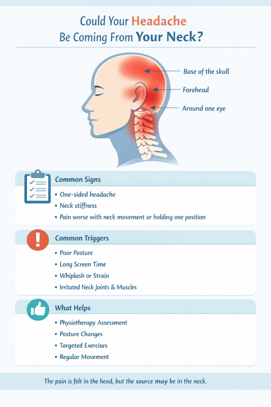
What may cause a cervicogenic headache?
Several everyday factors can contribute to cervicogenic headaches.
- Poor posture, especially “forward head posture”
- Whiplash injuries from car accidents,
- Sports injuries, or
- Repetitive strain can also irritate the joints and soft tissues in the neck.
- Conditions such as arthritis in the cervical spine may play a role as well.
Over time, these issues can cause irritation that refers pain up into the head.
How are they diagnosed?
Diagnosis usually involves a careful history and physical examination by a healthcare professional. They may check how your neck moves, press on specific joints or muscles to reproduce symptoms, and rule out other headache types. Because symptoms can overlap with migraines or tension headaches, getting an accurate diagnosis is important for effective treatment.
What can be done to treat them?
The good news is that cervicogenic headaches are often very treatable. Physiotherapy is one of the most effective approaches, focusing on improving posture, strengthening neck muscles, and restoring mobility. Hands-on treatments, targeted exercises, and ergonomic adjustments at work can make a big difference. In some cases, medications, nerve blocks, or other medical interventions may be recommended. If you frequently experience headaches along with neck pain or stiffness, talking to a physiotherapist can help you find relief and prevent the problem from becoming chronic.
Our physio's are ready to help you understand the cause of your headaches and find long lasting solutions to help. If you would like to make an appointment please book online or call the clinic.
Website: https://www.backinmotion.com.au/como
Phone Number: 9313 3414
This blog is written by Kylie Harris, Senior Physiotherapist at Back In Motion Como