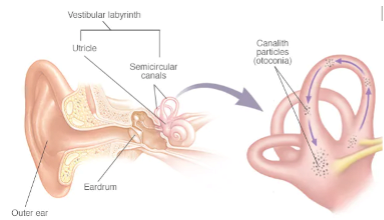
At Back In Motion Wantirna South (Opp, Knox City Shopping Centre), all physiotherapists are professionally trained to treat the BPPV (Bhattacharyya et al., 2017). It is thought that the otoconia inside the inner ear become displaced and interfere with normal flow in the fluid-filled semicircular canals (von Brevern & Lempert, 2022). There is significant evidence-based research to support physiotherapy treatment in the management of posterior and horizonal canal BPPV (Hilton & Pinder, 2014; RACGP, 2023). Individuals with BPPV commonly present with a spinning sensation (not lightheadedness) which lasts for a short duration, has a positional onset and nausea and occasionally visual disturbance (RACGP, 2023). Common triggers include rolling over in bed, getting out of bed, lifting your head to look up and bending forward (Bhattacharyya et al., 2017). Based on assessment findings and confirmation of BPPV diagnosis, the choice of treatment/maneuver is based on the clinician’s clinical opinion and is usually accompanied with a home exercise program (Hall et al., 2016). BPPV maneuvers typically alleviate symptoms immediately (Hilton & Pinder, 2014). Studies have demonstrated reductions in dizziness and vertigo, improved function, increased balance, and reduced risk of falling following vestibular physiotherapy (Hall et al., 2016; Morris et al., 2023). Research has found greater improvements if the exercises are customised to the specific needs of each person (Morris et al., 2023). If you have any further questions regarding vestibular physiotherapy, please contact our physiotherapists at Back in Motion Wantirna South on 9801 1500.
With appropriate physiotherapy, most patients will see a significant improvement in their symptoms relatively quickly.
References
Bhattacharyya, N., Gubbels, S. P., Schwartz, S. R., Edlow, J. A., El-Kashlan, H., Fife, T. D., Holmberg, J. M., Mahoney, K., Hollingsworth, D. B., Roberts, R., Seidman, M. D., & Steiner, R. W. (2017). Clinical practice guideline: Benign paroxysmal positional vertigo (update). Otolaryngology–Head and Neck Surgery, 156(3_suppl), S1–S47.
Hall, C. D., Herdman, S. J., Whitney, S. L., Cass, S. P., Clendaniel, R. A., Fife, T. D., Furman, J. M., & Woodhouse, S. N. (2016). Vestibular rehabilitation for peripheral vestibular hypofunction: An evidence-based clinical practice guideline. Journal of Neurologic Physical Therapy, 40(2), 124–155.
Hilton, M., & Pinder, D. (2014). The Epley (canalith repositioning) manoeuvre for benign paroxysmal positional vertigo. Cochrane Database of Systematic Reviews, 2014(12), CD003162.
Morris, A. E., Lutman, M. E., & Yardley, L. (2023). Effectiveness of vestibular rehabilitation in patients with benign paroxysmal positional vertigo: A systematic review. Physiotherapy Research International, 28(1), e1962.
RACGP. (2023). Vertigo in general practice. The Royal Australian College of General Practitioners. https://www.racgp.org.au
von Brevern, M., & Lempert, T. (2022). Benign paroxysmal positional vertigo. The Lancet Neurology, 21(4), 341–350.
Please note- we bulk-bill EPC, Workcover, TAC and DVA patients. NO GAP fee is charged.
Click on the images below to expand.