Men, Stay Strong and Supple After 40
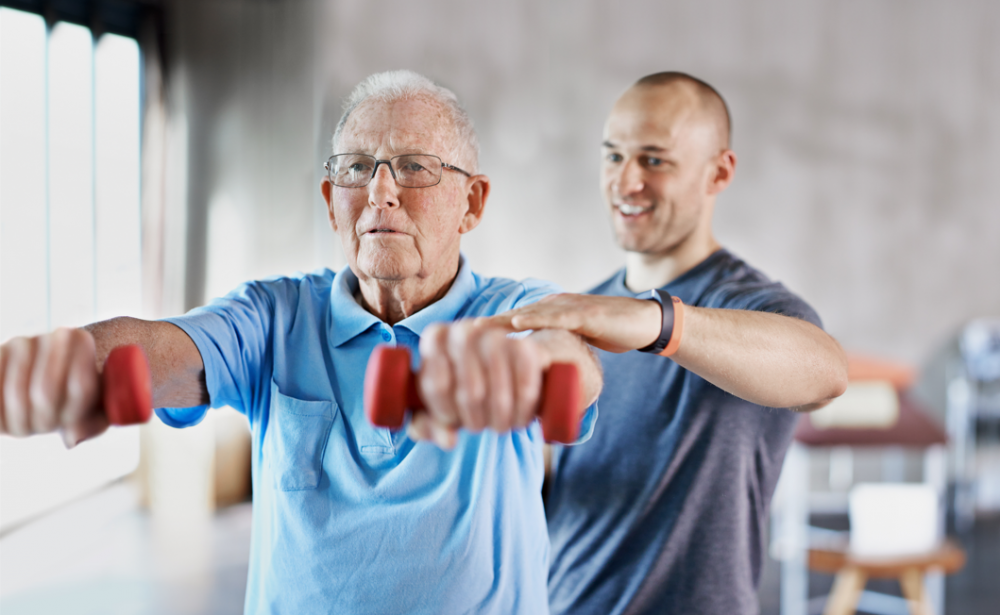
Waking up stiffer, sorer or tighter than you used to, even though you didn’t play footy on the weekend or fall off a mountain bike? This is common. But it is not something you should just accept as “getting old”.
For many men, the real issue isn’t age itself. It’s that life changes around 40. Work stress increases, sleep shortens, sitting time goes up, and family commitments quietly push training down the priority list. Sitting more and moving less is strongly linked with musculoskeletal pain, particularly in the low back, neck and shoulders [1]. Meanwhile, the big, powerful movements you used to do naturally start to disappear. The good news is that most of that strength, mobility and confidence can be rebuilt.
Why old injuries get louder
That ankle sprain from years ago. The shoulder you never fully rehabbed. Pain often settles before capacity returns, so you may feel “fine” while the joint, tendon or movement pattern is still weaker than it should be. Over time your body may compensate elsewhere — a stiff hip may make your back work harder, a weak ankle can affect your knee. The fix isn’t necessarily more stretching. It’s rebuilding strength, range and control.
Where testosterone fits in
Testosterone gradually declines with age, and evidence shows an additional population-level decline in average testosterone levels in men over recent decades, independent of age alone [2]. Low testosterone doesn’t directly cause stiff joints, but it’s linked with reduced energy, muscle mass, recovery, mood and libido [3] — and when those drop, men typically move less and become more vulnerable to aches and flare-ups. If you’re noticing persistent fatigue, low mood, reduced libido or a real drop in strength, it’s worth a chat with your GP rather than brushing it off. While you’re there, it may also be worth asking about a PSA test, a simple blood test used to check on prostate health, which becomes more relevant as men get older.
Strength is your best anti-stiffness tool
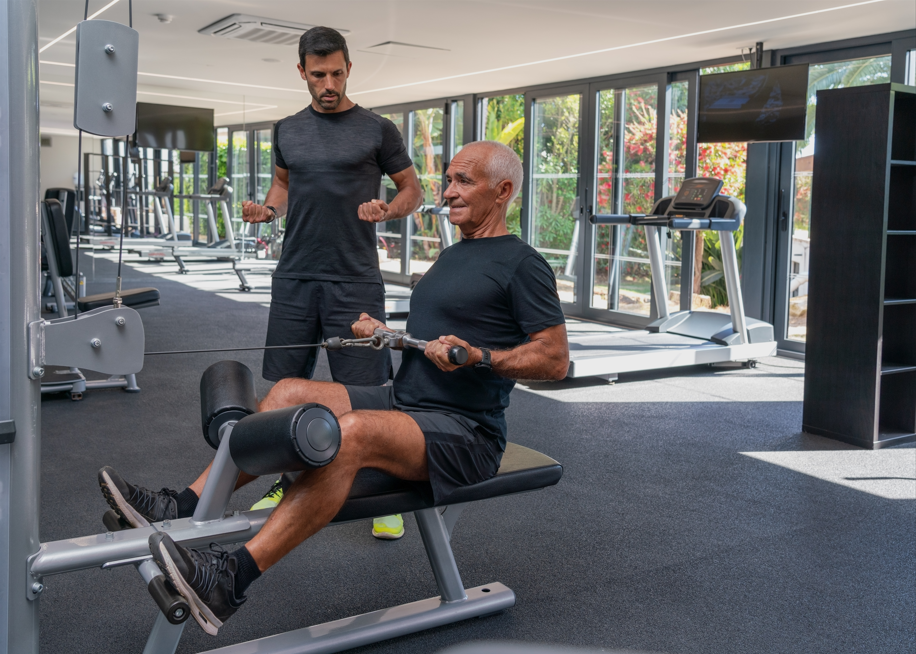
Mobility matters — but strength is often the missing piece. Regular resistance training has been shown to meaningfully reduce pain and improve function and quality of life, including in people with chronic low back pain [4]. Aim for a couple of sessions a week that cover the big movement patterns your body relies on day to day, for example, squatting, hinging, pushing, pulling, carrying and rotating. It doesn’t need to be complicated or in a gym, what matters most is consistency and gradually building on what you did last time.
Walking helps, but your body needs more than that
Many men over 40 don’t need more random exercise, they need more variety in how they move. Walking is a great habit, but on its own it doesn’t ask much of your hips, shoulders or trunk. Health guidelines recommend adults do muscle-strengthening activity on at least two days a week, in addition to regular walking or other aerobic activity, because the two provide distinct and additive benefits [5]. In practice, that means also giving your body chances to squat, reach, rotate, carry and occasionally move with a bit of speed — not just walk in a straight line.
The takeaway
Feeling stiff after 40 is common, but it isn’t inevitable. Sleep better, sit less, strength train twice a week, and take old injuries seriously rather than managing around them. You don’t need to train like you’re 25, you just need to train like a smart man who wants to stay strong, mobile and capable for the next 40 years.
Ready to get started? Our physiotherapy and exercise physiology team can assess your strength, mobility and old injuries, then build a program around your goals. Get in touch with your local clinic to book an assessment today.
This article is general health information, not a substitute for individualised clinical advice. Please consult a qualified physiotherapist, exercise physiologist or your GP for guidance specific to your circumstances.
References
Dzakpasu FQS, Carver A, Brakenridge CJ, Cicuttini F, Urquhart DM, Owen N, Dunstan DW. Musculoskeletal pain and sedentary behaviour in occupational and non-occupational settings: a systematic review with meta-analysis. Int J Behav Nutr Phys Act. 2021;18(1):159.
Travison TG, Araujo AB, O’Donnell AB, Kupelian V, McKinlay JB. A population-level decline in serum testosterone levels in American men. J Clin Endocrinol Metab. 2007;92(1):196-202.
Bhasin S, Brito JP, Cunningham GR, Hayes FJ, Hodis HN, Matsumoto AM, Snyder PJ, Swerdloff RS, Wu FC, Yialamas MA. Testosterone therapy in men with hypogonadism: an Endocrine Society clinical practice guideline. J Clin Endocrinol Metab. 2018;103(5):1715-1744.
Rodríguez-Domínguez AJ, Moral-Munoz JA, Guzmán-Gómez JD, Valero-Ortiz J, González-Gómez L, Cardellat-González M. Does resistance training improve pain intensity, quality of life, and disability in people with chronic nonspecific low back pain? A systematic review and meta-analysis. Disabil Rehabil. 2025 Oct 9:1-14.
Bull FC, Al-Ansari SS, Biddle S, Borodulin K, Buman MP, Cardon G, et al. World Health Organization 2020 guidelines on physical activity and sedentary behaviour. Br J Sports Med. 2020;54(24):1451-1462.